
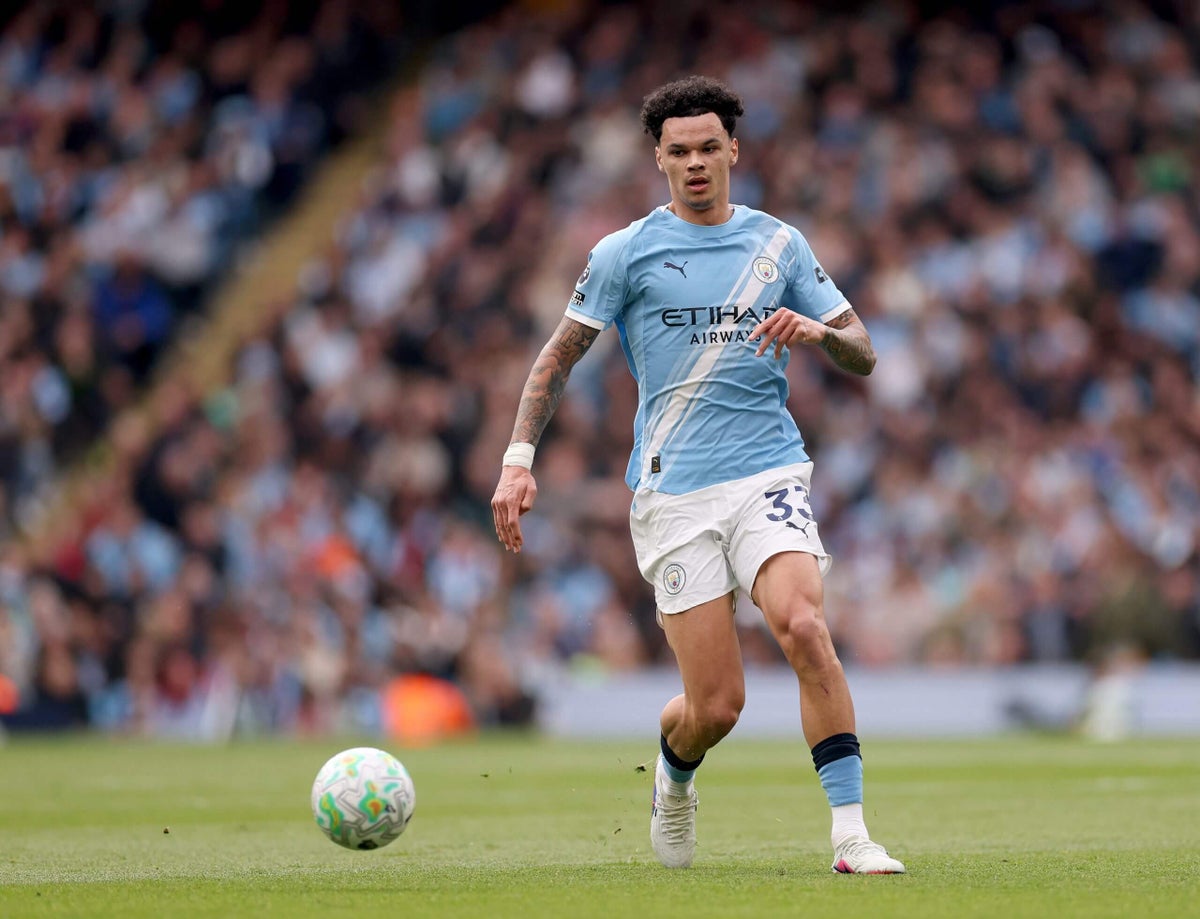
Three seasons ago, having experienced varying levels of success in trying to convert full-backs into midfielders or midfielders into full-backs, Pep Guardiola finally had the opportunity to bring through a player specifically for that role.
Rico Lewis was neither one thing nor the other; he didn’t consider it out of his comfort zone to play as Guardiola wanted, because Lewis was developed specifically to play in that ‘half-back’ role.
But Lewis also had a weakness. “If he was a little bit taller, he would already be considered one of the best players in the Premier League,” Guardiola said in 2023. “The problem we have is… he is so small, so small. We judge him because he is like that. (He does) have weak points. The long balls, he cannot win them.”
Guardiola, therefore, tried something else at full-back. When City won the Champions League in 2023, he often fielded converted centre-backs at full-back. Guardiola talked about the increased importance of winning the duels, and those natural defenders worked well in that sense, but they lacked technical quality in specific situations and struggled to progress the ball fluently through midfield.

Nico O’Reilly played an integral role in Erling Haaland’s winning goal (Michael Regan/Getty Images)
So in came Nico O’Reilly, an even more modern hybrid: a cross between the role played by converted centre-backs and the role played by Lewis — who, incidentally, was last seen in the Premier League three months ago, struggling at right-back in the 2-0 defeat at Manchester United.
O’Reilly is the latest upgrade on this curious role, possessing the energy levels of a full-back and the awareness of a midfielder. Add in the physicality of a centre-back and the goalscoring instincts of a centre-forward, and he’s a true all-rounder.
After playing as a midfielder for most of February, O’Reilly is back to operating as a left-back who pops up in midfield. And he was key to Manchester City’s 2-1 victory over Arsenal on Sunday, with his performance illustrated in the player dashboard below.

From the outset, Arsenal weren’t quite sure how to close him down. Here, Martin Odegaard and Declan Rice are dealing with City’s midfield duo. Noni Madueke has pushed forward onto centre-back Marc Guehi. And that means Martin Zubimendi, Arsenal’s holding midfielder, has the task of shutting down O’Reilly, City’s nominal left-back — a curious situation.

On other occasions, it was different. Here, left-winger Jeremy Doku has moved inside, so Zubimendi tracks him. O’Reilly is now the responsibility of Cristhian Mosquera, who is too slow to shut him down and prevent the 21-year-old from turning.

The pressing question was Arsenal’s first problem with O’Reilly. The second was what he did in the final third: making runs into the channel to collect balls from Doku. Here, O’Reilly’s starting position, infield, is important in opening up the passing lane from Guehi to Doku. O’Reilly then charges into the box, gets the pass from Doku and cuts the ball back for Erling Haaland, whose shot is blocked.

Here’s a similar situation, with O’Reilly now acting as the link between Guehi and Doku, then sprinting into the channel for a return ball — which was, on this occasion, overhit.

Here’s a more complex example of the pressing problem. Initially, in this situation, Madueke is again picking up O’Reilly. But then Madueke moves forward to press Guehi, and points for Zubimendi to track O’Reilly. The problem comes when Rodri, having received the ball next to his centre-backs, then moves up the pitch and positions himself in a zone where Zubimendi feels obliged to mark him.
This leaves O’Reilly free, Rice is a little too slow to move across and stop him, and City can get O’Reilly moving forward on the ball. He plays the ball out to Doku, who passes inside, but Haaland miscues his shot.

Arsenal never quite got to grips with O’Reilly — even in this situation, when two players shut him down, O’Reilly somehow got away from the challenges.

At half-time, Mikel Arteta decided to withdraw Madueke and introduce Gabriel Martinelli in a relatively unfamiliar right-sided role — probably a sign he knew Arsenal were struggling to contain O’Reilly.
And in that second half, O’Reilly’s defensive diligence shouldn’t be underestimated. In the situation when Havertz had a great chance to put Arsenal 2-1 up after Guehi had lost the ball and dived into a challenge, it was O’Reilly who sprinted back from a No 10 position to clear the ball off the line.

But O’Reilly’s game was really about his ability to confuse Arsenal’s press, and his runs into the channel. Here’s a good example of him carrying the ball 40 yards downfield, playing in Doku on the outside, and getting the return pass — albeit accidentally, as this driven Doku cross hit him, and he couldn’t quite get the ball under control.

City’s winner was largely about the problems O’Reilly caused. As Gianluigi Donnarumma initially has the ball, Odegaard is screaming at Martinelli specifically to pick up O’Reilly. The Brazilian, though, sees Donnarumma seemingly about to roll the ball to Guehi, and starts pressing. But either Donnarumma was bluffing, or he changes his mind and gathers the ball again. O’Reilly is now free, points where he wants the ball, and Donnarumma’s throw bypasses Madueke. Odegaard is furious.
And this simple throw might just change the destiny of this season’s title.

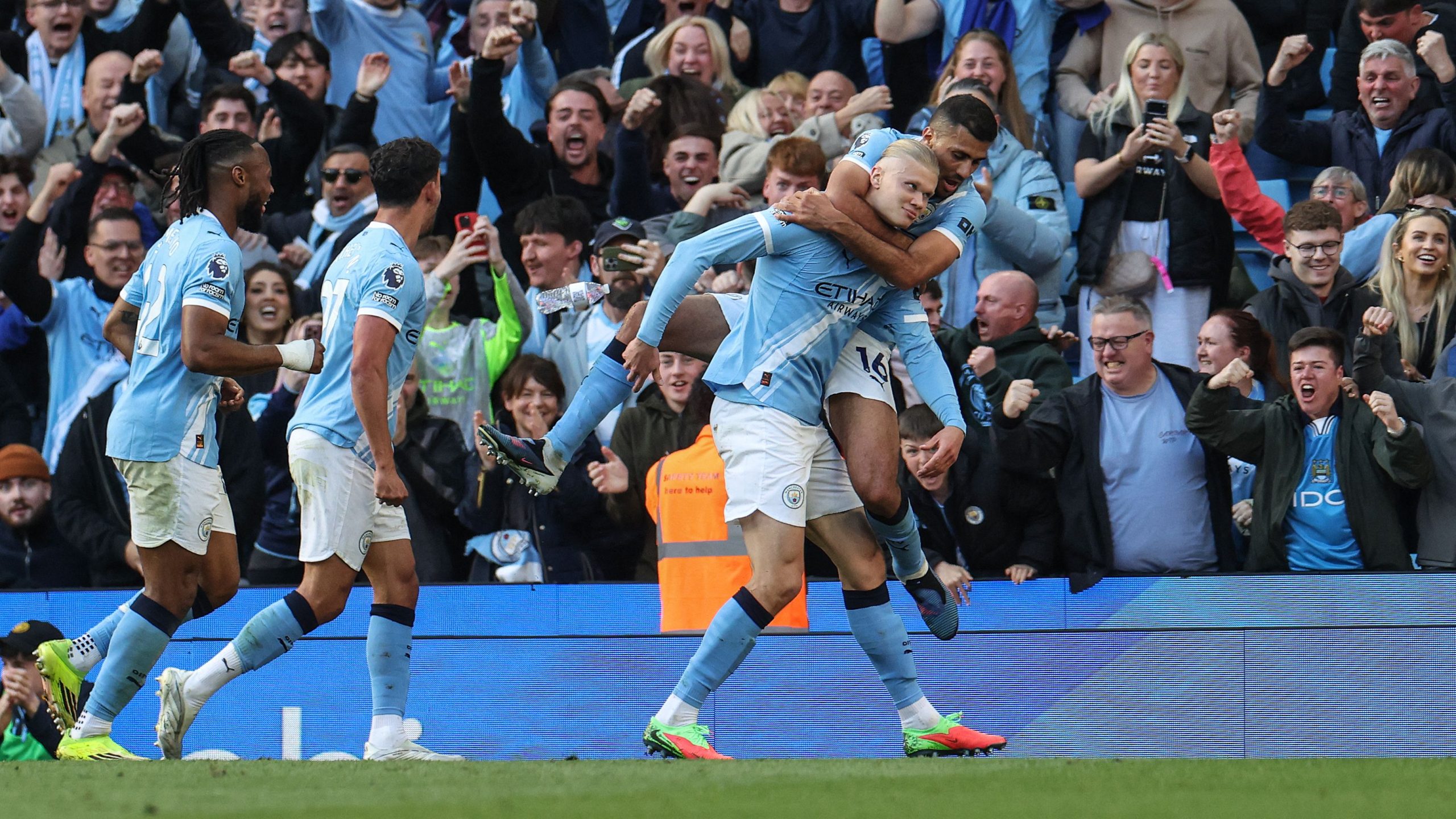
Because O’Reilly again carries the ball into the opposition third. He again finds Doku. He again carries on his run into the channel and receives a return pass. His ball across was probably intended for the onrushing Rodri, but it rolls through to Haaland, who slams home the winner.

Among many other frustrations for Arsenal, one is that they have spent much of this season without their equivalent of O’Reilly: Riccardo Calafiori. In the reverse fixture, Calafiori was the Arsenal player who took up the most interesting positions, moving infield from left-back in a similar manner to O’Reilly.

Even in a game of fine margins that could have gone either way, it felt like City were more dynamic and less predictable with their movement and build-up play. O’Reilly was the literal match-winner in the recent Carabao Cup final between these sides, scoring both goals.
He didn’t get on the scoresheet here, but given the importance of this victory, this was surely an even more significant performance.

Leave a Reply