
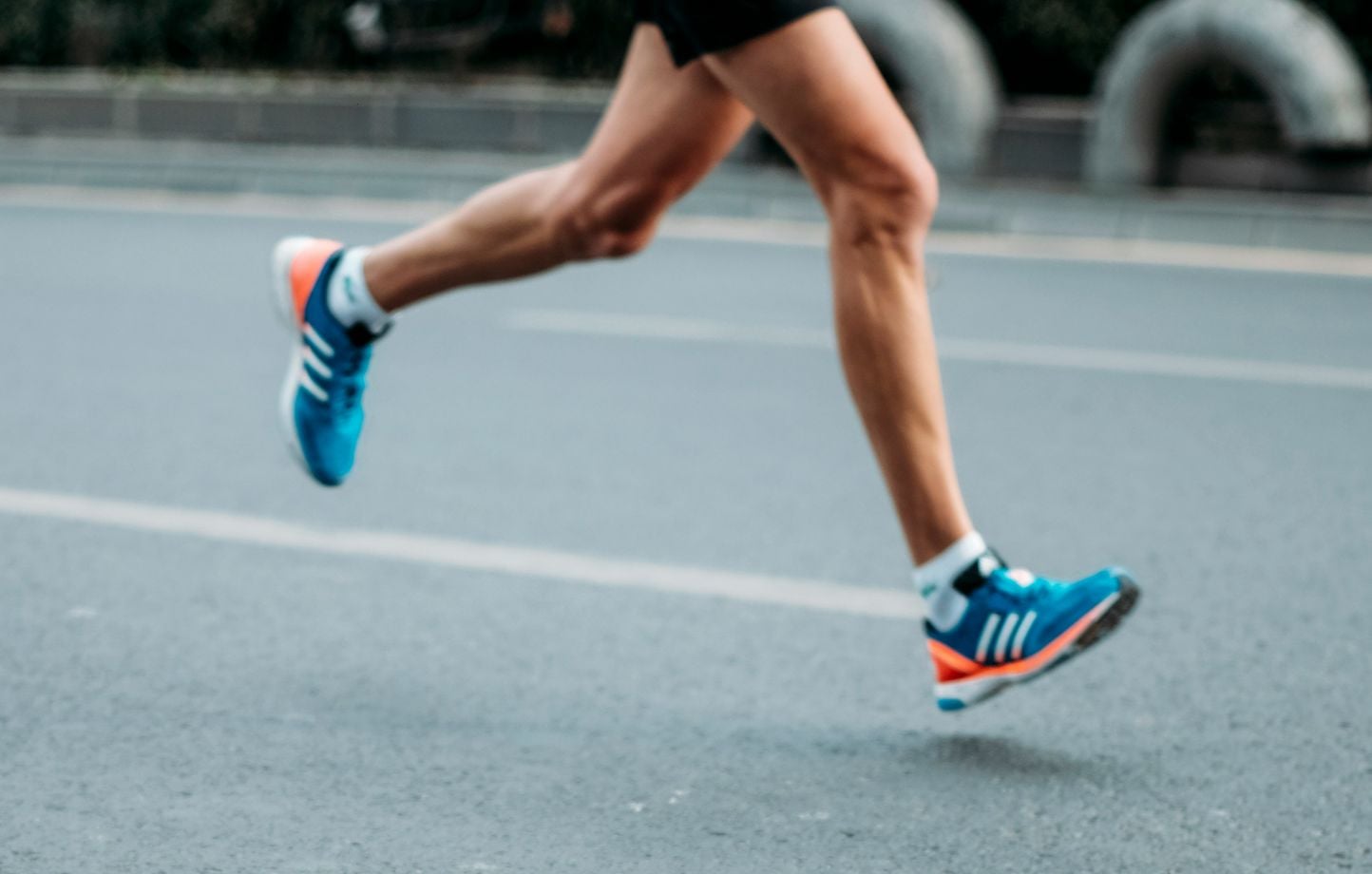
We know the familiar expression “hangover” but less so its alter ego in sport “wooden legs”. Either expression does not bode well. “Wooden legs” often appear after intense muscular effort. And then we think about all those videos of marathon runners after races who can’t do a squat or walk normally. Is this inevitable? How to fix it? HAS 20 Minutesa sports osteopath gave some preventive and corrective techniques to heal your body.
What is the feeling of “wooden legs”?
The expression “wooden legs” refers to “a feeling of stiffness, heaviness and loss of muscular flexibility after exercise,” explains Samuel Urtado, sports osteopath. Physiologically, this corresponds to micro-lesions of muscle fibers, associated with local inflammation and an accumulation of neuromuscular fatigue. But “it’s not just muscular, the nervous system and non-muscular tissues (fascia) are also involved,” continues the founder of Team Trail Paris. This explains this overall feeling of rigidity.
The good news is that these sensations are not inevitable according to the osteopath: “a trained athlete, with good load management and optimized recovery, can greatly limit or even avoid “wooden legs””. This sensation appears mainly in three cases: unusual or too intense effort, lack of progression in the load, insufficient recovery (sleep, hydration, nutrition).
Two preventive routines to avoid wooden legs
Before the effort, we can : do joint mobilization (hips, ankles) and muscles before starting to run. Warm up for a third of the workout: progressive muscle activation (intensity increase). Maintain controlled breathing to prepare the nervous system.
After exercise, you can: Return to active calm (walking, light pedaling), gentle mobility exercises and light stretching. Then, return to slow breathing, with a low volume of air, in order to restart the parasympathetic system. It is also important to quickly provide your body with sufficient nutritional intake and hydration.
With these tips, the goal is not to “force recovery,” but rather to facilitate physiological transitions.
How to remedy the feeling of “heavy legs” and recover better?
There is no single method or magic trick to recover well, “but a clear hierarchy,” says Samuel Urtado. And quality sleep is the first condition. “This is when tissue and nervous system repair occurs.” Next comes nutrition, “with enough protein, carbohydrates, and good hydration.” And finally, better effort management, “in order to avoid load peaks”.
In correction, that is to say when you already have heavy legs, you can stay moving, at low intensity, to optimize recovery. Contrary to what one might think: “it’s better than total rest”, assures the osteopath. You can also optimize your recovery with additional tools. “These are useful but not magical,” warns the professional. He recommends heat therapy, compression boots, or even self-massage, manual or with a massage gun. The result is almost immediate relief. What ? “Jet boots” from Therabody or Decathlon massage gun, for example.










Leave a Reply