
‘Insanity is doing the same thing over and over again and expecting different results’ is a popular quote misattributed to Albert Einstein, but that doesn’t stop it being a good point.
Finishing as Premier League runners-up three years in a row could drive anyone insane, but as Arsenal manager, Mikel Arteta has had to keep a clear mind to find different ways to get his side over the line.
After their first second-placed finish in 2022-23, he reacted by signing more physical and versatile players in Declan Rice, Kai Havertz and Jurrien Timber. The response to falling short again in 2023-24 was to add the unpredictable duo of Riccardo Calafiori and Mikel Merino.
For all the solutions Arteta came up with in those three seasons, injuries were a constant concern. William Saliba and Takehiro Tomiyasu were key misses in the first run-in, Timber suffered a major ACL injury the year after, and in 2024-25, Havertz, Odegaard, Bukayo Saka and Gabriel all had long-term absences.
With that in mind, when asked what the difference between finishing second and first was in a press conference last May, he said: “One is the amount of games and time that we have played with 10 men. The availability of the squad throughout the 38 games. It’s very difficult to manage and to have very strong performances consistently. We dropped a lot of points when we were ahead as well, which is something that really needs to improve.”
The disciplinary issues of last year have been resolved, as Arsenal have received zero red cards this term compared to six last season. They have dropped fewer points from winning positions, too.
Eyebrows may have been raised when Arsenal made eight signings last summer, but that increase in numbers has proven necessary given how their injuries have evolved this season.

Arsenal boosted the numbers in their squad last summer, and it has proven a necessary decision (Shaun Botterill/Getty Images)
At various points this year, Arteta has been without a number of players in the same position.
He was without two centre-forwards (Havertz and Gabriel Jesus) for the first half of the season, but had a period in November with six attack-minded players (three centre-forwards) out. The defence buckled in December, with at least two from this unit out for nine league games. Three defenders were out for a run of three league games around Christmas, and that rose to four at home to Brighton & Hove Albion when Declan Rice filled in at right-back.
Midfield absences have been more spread out, but Arsenal have been without at least two for their last eight league games.
The latest positional grouping of injuries saw Arteta move Saka into a more central role for the first time in five years in February.
“Before it was the strikers, then it was the defenders, now it’s the midfielders,” he said after Arsenal beat Wigan Athletic 4-0 in the FA Cup. “We are still coping with that, but we need some players back and fit to give us not only numbers, but different options in relation to the opponents that we have.”
When so many injuries come to players in similar positions, it can be natural to wonder whether there are specific reasons why.
It has been coincidental in many instances. The clump of defensive injuries have included ankle injuries to Saliba and Cristhian Mosquera, which are obviously unpredictable in their nature. Some players, such as Ben White, Martin Odegaard and Noni Madueke have also dealt with knocks and contact injuries.
Arteta gave his thoughts on injuries piling up in certain positions in December, saying: “The fact that you are missing players, you are loading other players more. That’s a consequence and it’s a really dangerous circle.”
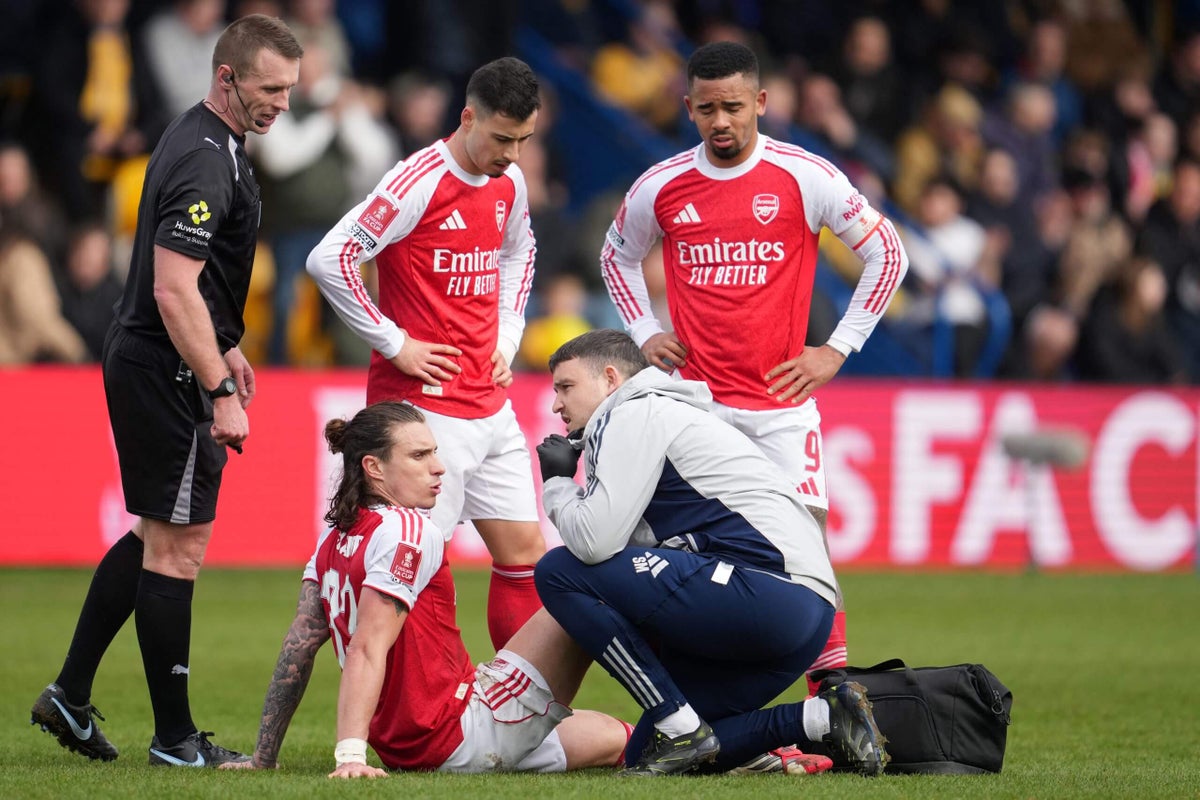
White was a prime example of that ‘dangerous circle’ midway through the season. After not featuring in the Premier League for 109 days, the 28-year-old started four matches in 10 days, with Gabriel, Saliba and Mosquera all out injured. Full-back is one of the most physically demanding roles on the pitch in the modern era, considering the distance they cover when sprinting to press (examples below), tracking back, and supporting attacks, so this was an incredibly steep load increase.

The result was a hamstring injury suffered against Wolves that kept him out for two weeks and halted the momentum White was gathering.
Saliba had returned for that match, but afterwards, Arteta added: “We even had to risk Willy today because probably it wasn’t best to play 90 minutes because we were buying tickets for another injury, but we don’t have anybody else.”
At the time, the Arsenal manager called these groupings of injuries a test that the team was reacting to “very well”.
For instance, when Havertz, Jesus and Viktor Gyokeres were all out up front, Merino stepped up with four goals and three assists in seven starts at centre-forward. When Odegaard suffered injuries earlier this season and in recent weeks, before he himself got injured, Eberechi Eze played more centrally.
Fellow new signings Madueke and Piero Hincapie have also started 12 and 17 league games respectively to help pick up the slack.

Entering April in the FA Cup and Champions League quarter-finals and with a nine-point advantage at the top of the Premier League (albeit Manchester City have a game in hand), the toughest part of the test is here.
That is why amid the external hysteria around the 11 Arsenal players who withdrew from their national squads during this break, some understanding is needed.
Many of these players have been going full-tilt for months. Since the last international break in November, Arsenal had midweek fixtures in 15 out of the 17 weeks before the Carabao Cup final. Even their ever-presents have been suffering, with England manager Thomas Tuchel saying: “Declan is a key player, Bukayo is a key player, why would I take this risk? Of course I want them in my team, of course I want them to play (against Japan). But this is just not the moment to push.
“I don’t think Arsenal would be happy if I said what the injury was. But he (Rice) feels a discomfort since quite a while, and he’s playing through it. He’s just now on the edge, where he thinks, ‘Does this make sense, what I’m doing here, to push through with 70 per cent and push myself and push myself?’. And the same with Bukayo.”

Noni Madueke was injured playing for England against Uruguay in this month’s international break (Henry Nicholls/AFP via Getty Images)
Going over that edge would not be helpful for Arsenal, the players, or for England this summer, and that is the same for other players and other nations.
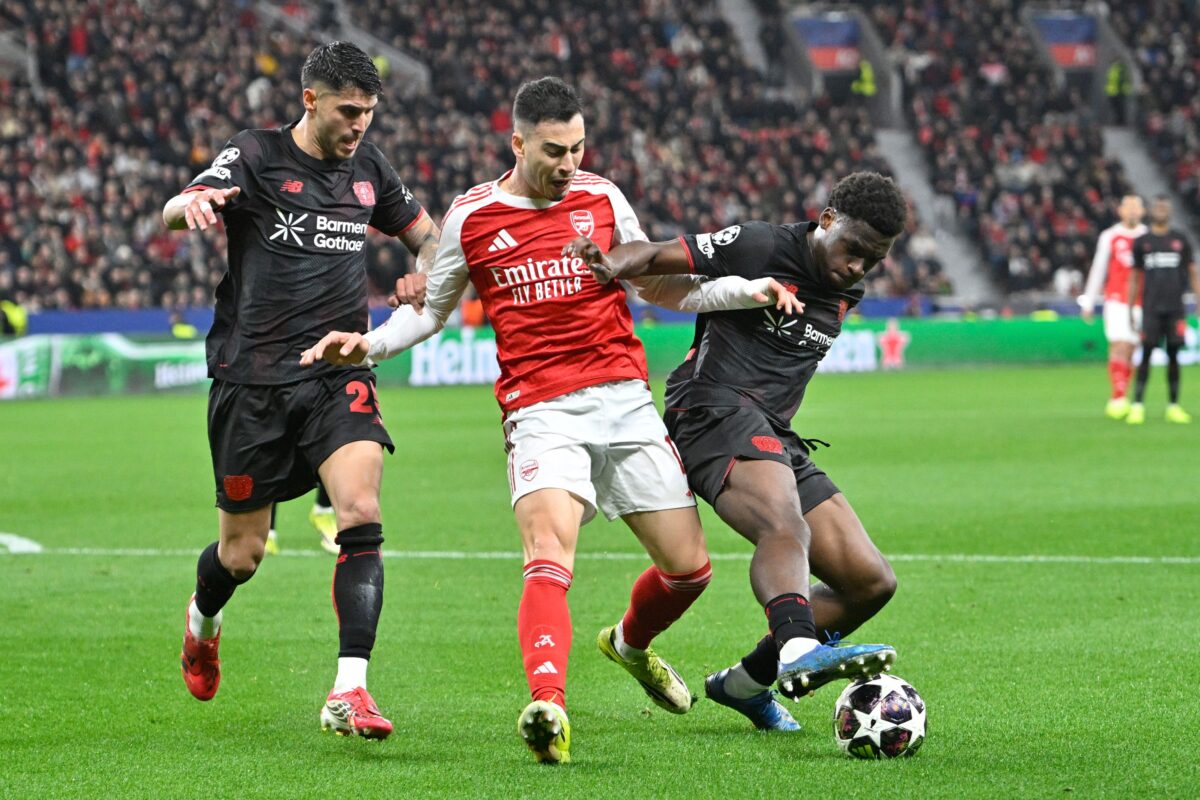
Gabriel Martinelli, for instance, has been in and out of starting line-ups for Arsenal recently. He travelled to Brazil’s internationals in the U.S. and scored against Croatia.
On the other hand, Gabriel Magalhaes has suffered two hamstring injuries in the past year and started 13 of the 14 league games since returning. With knee discomfort of his own, Arsenal and Brazil conferred and decided that not travelling was a smart decision in the short and long term.
Madueke’s injury on England duty, as well as Timber and Eze already going into the break with issues, will put more strain on those positions in the coming weeks, so Arteta’s use of his squad will be as important as ever across three competitions.
Southampton away in the FA Cup may be the best opportunity to opt for some more traditional rotation, but as the run-in intensifies, the Arsenal manager will want what he highlighted as necessary 11 months ago — not just numbers but different options, too.


Leave a Reply