
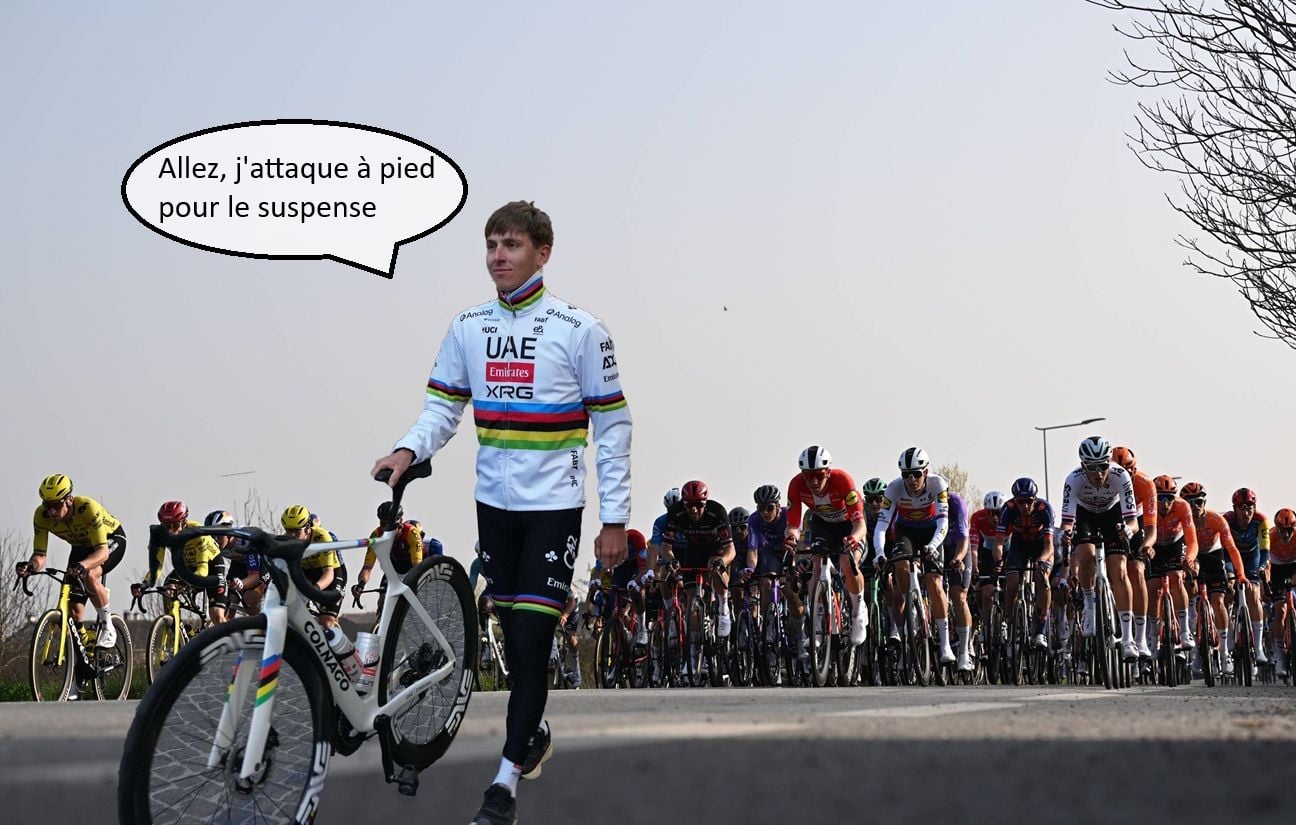
Used to sleeping soundly, Tadej Pogacar must have had a few little nightmares in recent nights, not because of the tense international situation or the second round of the French municipal elections. If the pajamas are soaked and the breath is short after waking up with a start, it is because of this four-headed monster which invades the thoughts of the double world champion at the beginning of spring: Milan-San Remo, which is played this Saturday.
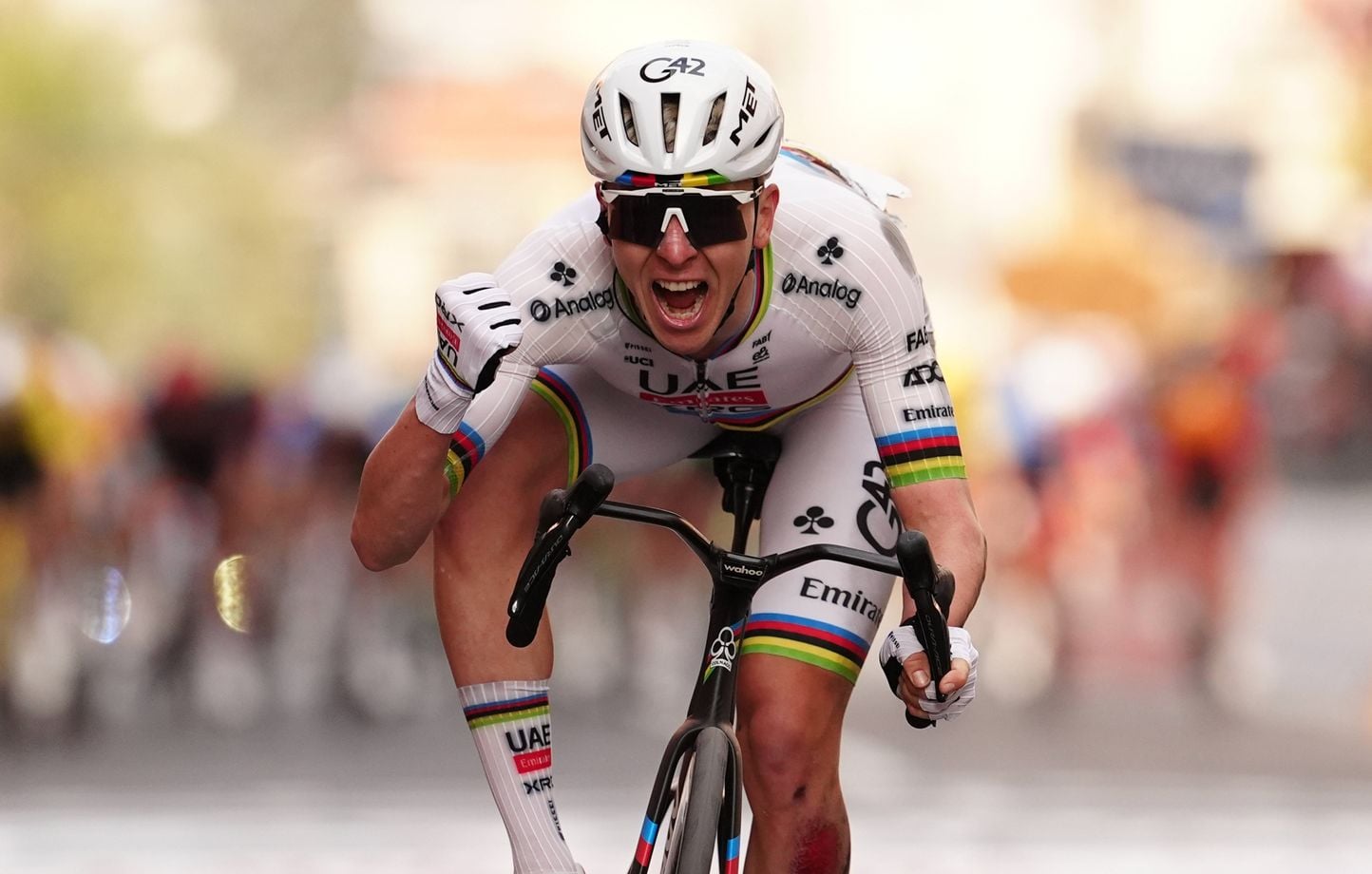
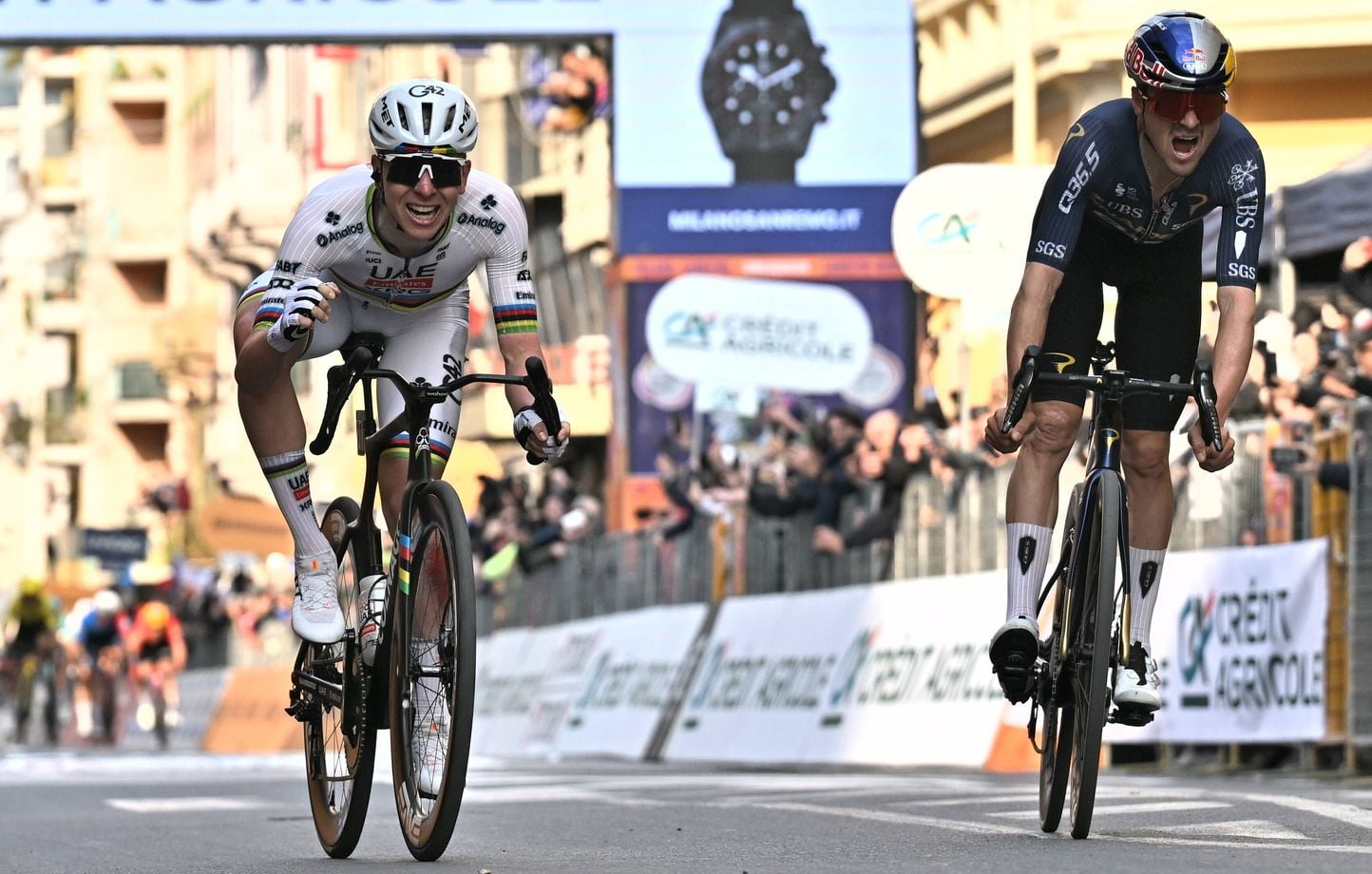
With Paris-Roubaix, the Classicissima is one of the last races to still resist the Slovenian invader. In five editions, Pogi has never been on the top step of the podium, often beaten in the last meters of Via Roma, after trying to leave everyone in the Poggio. But, each time, the Slovenian missile attacks do not cause enough victims to hope to impose themselves on the shores of the Mediterranean.
Repetition of effort and sustainability for Pogacar
Not used to seeing one of its chicks fail repeatedly, the UAE-Team Emirates staff had to bring together all the forces to put an end to this curse, as Maxim Frémeaux, coach and head of the performance division of the Van Rysel Roubaix team, explains to us:
« I was able to speak with his trainer and he told me that Pogacar had not done any altitude training at the start of the season to prepare for the classics or heat training which is very fashionable at the moment. He just told me, without going into details, that he oriented the training in classic mode. That is to say repetitions of efforts, and especially duration of efforts, because we are on races which are extremely long. »
Very specific training to be able to compete with the big thighs of Mathieu van der Poel or Jasper Philipsen, used to making very violent, very short efforts. But, accustomed to (very) long solo rides, could the one who imitated the most beautiful hairstyles of Pascal Hervé or Richard Virenque of the (hum hum) era reproduce such an effort over a race of almost 300 km, since his last attempts in the Cipressa and the Poggio were never successful?
Too long to attack very early?
“It’s certain that he can no longer wait for the Poggio (less than 10 km from the finish), but attacking from the start, no, that wouldn’t be very serious,” retorts the Italian Alessandro Ballan, former world champion, who finished just off the podium at Milan-San Remo in 2011. Even his team, if it obviously has to control the race, it cannot go all out from the start, it’s a far too long race. »
No attack 100 km from the finish like during the 2025 Worlds, nor a solo raid of 81 km like during the Strade Bianche in 2024, then? “It’s quite long anyway,” continues Maxim Frémeaux. And then we are not immune to a breakdown, a craving or a puncture at the wrong time. And if we have already lost teammates or if they are well underway when at the edge, it is over for the leader, we must remain reasonable. »
The coach nevertheless believes that the Emirati team can go through the wringer quite quickly in the race, even with the absence of big engines like Tim Wellens or Jhonatan Narvaez. A first acceleration on Il Passo del Turchino halfway through the race, a second slide on the Tre Capi in the last fifty kilometers before arriving at the famous Cipressa (22 km from the finish).
« We will have to do a very, very fast race, starting with the Passo del Turchino with his team, which we will have to do very hard, then especially the Cipressa (5.6 km at 4.1%), develops Alessandro Ballan. Tadej Pogacar will have to go on the attack, not only in the final of this climb, but from the start, with the help of his teammates, to go solo and do the Poggio and the final via Roma alone. For me this is the only tactic that can make him win. »
What if everything was at stake in the Cipressa?
He is not the only one. Fabio Baldato, one of the sporting directors of the Slovenian, also put the Cipressa as the justice of the peace of this Milan-San Remo. “The climb is quite short and the speed is extremely high, you have to drive at more than around 35 km/h,” he explained in Sporza. The legs are still relatively fresh, as there aren’t many climbs before, but it’s doable. »
35 km/h average in the Cipressa to hope to win in San Remo, feasible for Pogacar? A formality, finally. On March 3, the assassin with the child’s face broke his record for the climb in training, by completing the 5.6 km of the Cipressa in 8’51 minutes, or 37.8 km/h! A performance, spotted on Strava, which the person concerned quickly deleted from his account. Just so as not to give too much information to the competition.
“Tadej is that he already has a fairly high base engine and there he is working on his ability to produce watts at the end of the race,” concludes Maxim Frémeaux. What is important is the work to fatigue, the resistance to fatigue to be able to reproduce the efforts. When everyone starts to get tired, you have to be able to put in the watts so that at the end, there is no one left behind. As a result, he must put in good sessions or blocks which generate fatigue in order to try to reproduce what we encounter in this type of race like Milan-San Remo or Paris-Roubaix. » The paving specialists are also warned, Pogacar has never been so well prepared.










Leave a Reply