
In recent years, when major European clubs end decades-long title droughts, they tend to do it emphatically. They race into such a significant lead that they are spared the inhibiting weight of making history by the time the run-in arrives. It becomes a case of when, not if.
Liverpool ended 30 years of hurt in 2019-20, winning 26 of their first 27 fixtures to seal the Premier League with seven games to spare. In 2022-23, after 33 years, Napoli, a club long haunted by the ghost of Diego Maradona, won Serie A with five games left.
Across a 38-game season, the pressure that comes with such significant title wins can be dramatically reduced with sufficient early momentum. In that final stretch, it removes the idea of there being a contest at all.
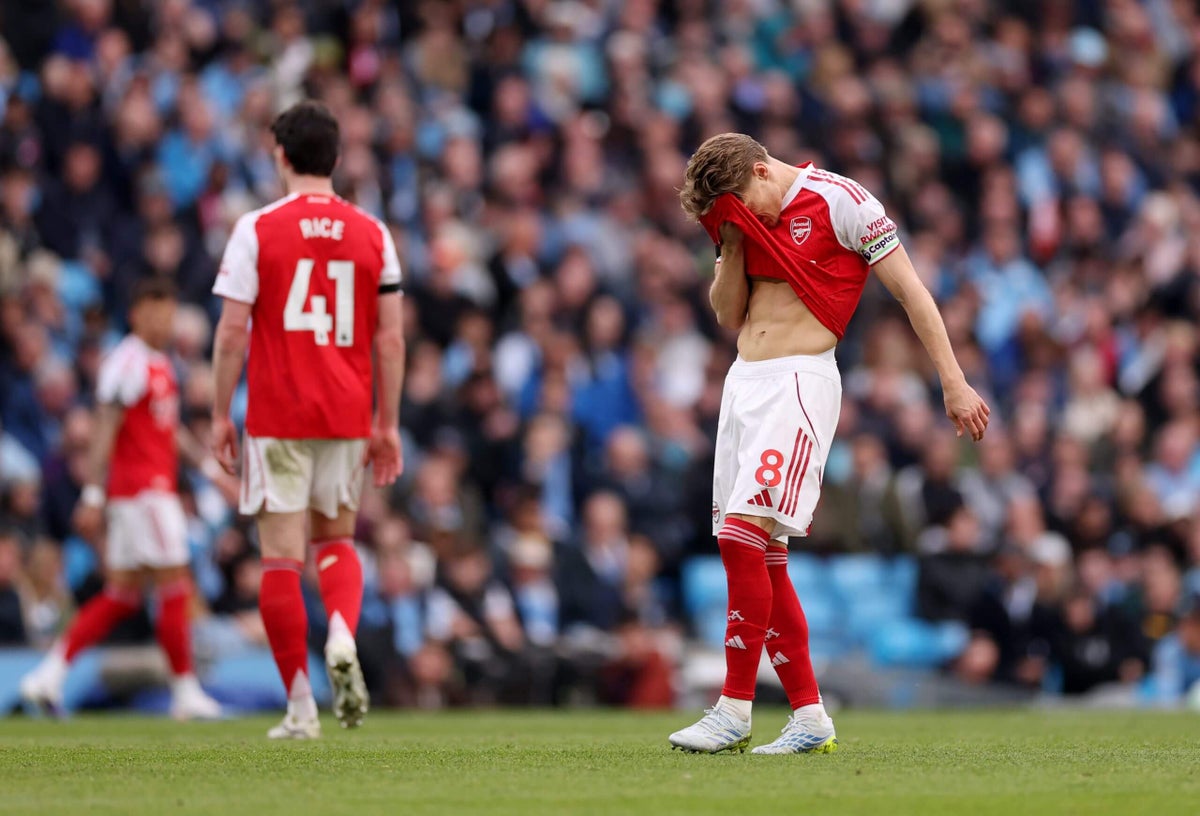
Arsenal, aiming for their first league title in 22 years, have had so many chances this season to make this a title procession of their own. Each time, they spurned the opportunity, leaving a sense that they twitch the moment silverware becomes faintly tangible.
On November 30, Arsenal travelled to Stamford Bridge after Manchester City had collapsed in successive weeks, dropping five points against Tottenham Hotspur and Brighton & Hove Albion. They had a chance to go seven clear after 13 games. When Moises Caicedo was sent off for Chelsea, they had an hour to do it with a man extra. Instead, they seemed content with a 1-1 draw.
On January 8, Arsenal hosted a Liverpool side in disarray a day after Manchester City had been held to a 1-1 home draw against Brighton. Arne Slot’s side were without Hugo Ekitike, Mohamed Salah and Alexander Isak. They had the chance to go eight points clear but could only draw 0-0.
A week later, Arsenal had another opportunity. This time to open up a nine-point gap on City, who had lost the Manchester derby in the early kick-off. That evening, Arsenal went to Nottingham Forest and managed another goalless draw with no shot on target in the entire first half.

Arsenal could not find a way to score against Nottingham Forest in January (Clive Mason/Getty Images)
On February 18, Arsenal were at home to Wolves with the chance to go seven points clear. Wolves had lost 19 of their 26 games, yet, after Arsenal went ahead after five minutes, they did not move through the gears. Arsenal were pegged back, went back into the lead, and lost control again late on, conceding a stoppage-time equaliser.
On April 11, with Manchester City not playing until a day later, Arsenal had the chance to go 12 points ahead. Yes, they would have played two games more, but that is substantial table pressure with City travelling to Chelsea. Instead, they were lethargic and devoid of inspiration, losing 2-1 to Bournemouth.
Suddenly, after months of Arsenal letting these opportunities slip, it is back in Manchester City’s hands. The Etihad game became an iceberg, and one they should have navigated around some time ago.
Of all the missed opportunities, Wolves was the most unforgivable. It was emblematic of Arsenal’s inability to kill off games. For such a strong side, they have few ‘bankers’. When they go ahead, they do not build up a head of steam which, too often, means they are in a contest until the very last kick. It does not present Arteta with as many windows to rest his key players and, mentally, his team have to stay at peak concentration levels. The additional energy expended in games seems to have a cumulative effect.

Gabriel shows frustration during the 2-2 draw with Wolves (Carl Recine/Getty Images)
The loss of momentum has been stark. Arsenal have won just six of their last 13 Premier League games. Having looked infallible for large portions of the season, talked of as potential quadruple winners, they have become a team far less sure of itself.
They seem to hit these ruts every season. In 2022-23, after losing a Europa League quarter-final to Sporting CP on penalties, they took only 12 of the final 27 points available to them to blow a five-point lead. They did lose William Saliba to injury and lacked the squad depth to account for his loss at that stage, but letting a setback turn into a chain of bad results, that is something that has recurred.
The following season, November’s FA Cup loss to West Ham preceded a 1-0 defeat against Newcastle. In December, a 1-0 loss to Aston Villa led to a run of one win in six games — the last being an FA Cup defeat to Liverpool. They were close to faultless in the second half of the season but that period cost them the league.
In 2024-25, they had three periods in which they went three or more games without a win in the league. Again, a 1-1 draw away to Brighton, that they should have won, led to a winless three-game week. A few days later, they lost the first leg of the Carabao Cup semi-final to Newcastle and, a few days after that, they lost on penalties at home to Ruben Amorim’s Manchester United in the FA Cup.
In this season’s Premier League, Arsenal have done better to avoid these clusters, only going winless in consecutive league games three times. But the Carabao Cup final defeat snowballed into a shock FA Cup defeat to Championship side Southampton and two costly league defeats to Bournemouth and City.
They do not seem capable of getting one defeat out of their system. Gabriel, a leading candidate for Premier League player of the year, has begun to embody this fragility again. Getting into needless confrontations with the opposition striker is one thing, but during these run-ins, his passing often becomes panicked and his clearances become messy. It is a lack of composure that spreads.
There are signs that this Arsenal team may be coming to the end of a cycle. It is only natural. David Raya, William Saliba, Gabriel, Jurrien Timber, Declan Rice, Martin Odegaard, Bukayo Saka, Gabriel Martinelli, Kai Havertz and Leandro Trossard are either coming to the end of their third or fourth title challenge. It is a lot of baggage to carry.
As Jurgen Klopp’s Liverpool side learned, these chases eventually break a team. Maintaining that level for this long — four years — is exhausting, both mentally and physically. Interspersed between points tallies of 97, 99 and 92 was a 69 in 2020-21. Liverpool shot back up to 92 the next year but dropped off again the following season and had to grow again over two seasons to finally win their second title of that 2018-2025 era.
If Arsenal do not claim this year’s title, their contribution to those seven years will be confined to the margins. A very, very good team, as good as it gets without being great, will fade to dust.
The silver lining? Arsenal have the more favourable fixtures. If, after allowing this to become a dramatic shootout, they do end the 23-year drought, it will be the most spectacular outpouring of emotion any Arsenal fan could have hoped for. Perhaps, after all this talk of bottling, a final-day victory is the perfect ending to this chapter.


Leave a Reply