
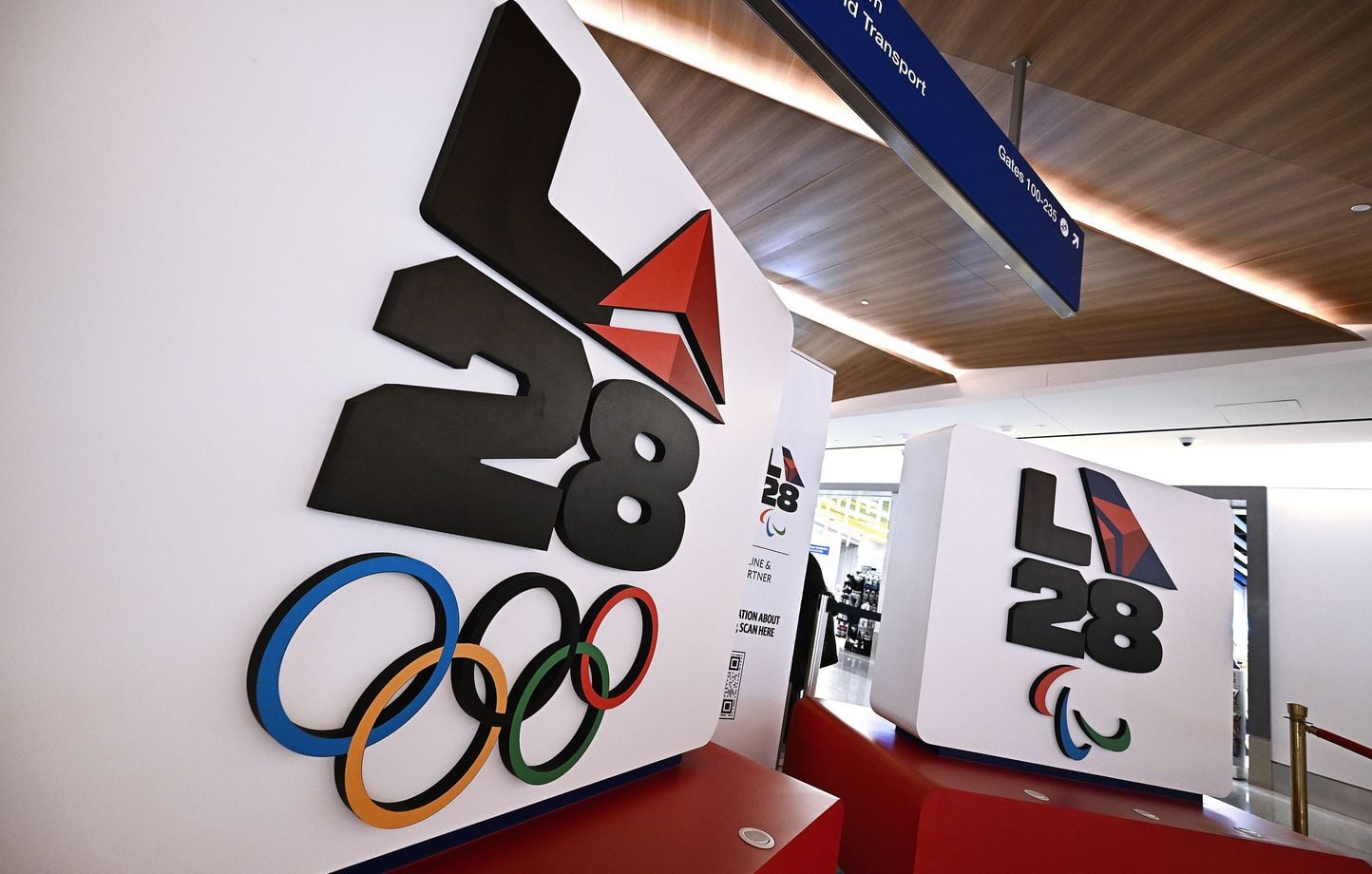
Banned since 1999 by the IOC, femininity tests will be practiced again as part of the 2028 Olympics. And France was keen, through its Minister of Sports Marina Ferrari, to express this Friday its “great concern about this decision” of the Olympic Committee, which chose a leap into the past.
“These tests, implemented from 1967, ended in 1999 due to strong reservations from the scientific community regarding their interest. France regrets this step backwards,” added the French minister, for whom this restoration raises “major concerns” and constitutes “a reductive and potentially stigmatizing approach.”
“Many ethical, legal and medical questions”
Banned here, these tests effectively ban transgender athletes and a large number of intersex athletes from women’s sport. The IOC indicated that it would be up to international federations and national sports bodies to organize these chromosomal tests, which must be taken “only once in the athlete’s life”.
“If it is illegal in a country, athletes will have the opportunity to be tested when they travel for other competitions,” said its president Kirsty Coventry. So they are in France, for example. “We are opposed to a generalization of genetic tests which raises numerous ethical, legal and medical questions, particularly with regard to French legislation on bioethics,” underlined Marina Ferrari.
Femininity tests were already introduced last year in athletics, boxing and skiing. And in September, the French boxers were deprived of the World Championships in Liverpool: tested upon their arrival in England, they were unable to transmit the results in time.
For the French government, the decision to reinstate these tests raises in particular “major concerns since it specifically targets women, by establishing a distinction which undermines the principle of equality”.
“It defines the female sex without taking into consideration the biological specificities of intersex people whose sexual characteristics present natural variations, which leads to a reductive and potentially stigmatizing approach,” adds the minister.
She announces that she will set up “a national observatory, in accordance with the recommendations” of a report submitted to the government in 2024 and drawn up by a committee of experts. This committee is chaired by Professor Jean-François Toussaint, director of the Institute of Biomedical Research and Epidemiology of Sport, and Sandra Forgues, gold medalist in two-seater canoeing at the 1996 Olympics as a man, under the name Wilfrid Forgues, before beginning his transition.
Our file on the 2028 Olympics
While Kirsty Coventry has still not met Donald Trump, this decision by the IOC raises the main subject of potential conflict with the President of the United States, host of the 2028 Olympics, who at the start of his second term had banned transgender athletes from women’s sport by decree. The latter welcomed the news in a publication on his Truth Social network: “This is only happening thanks to my powerful decree which defends women and girls! “, he wrote.







Leave a Reply