
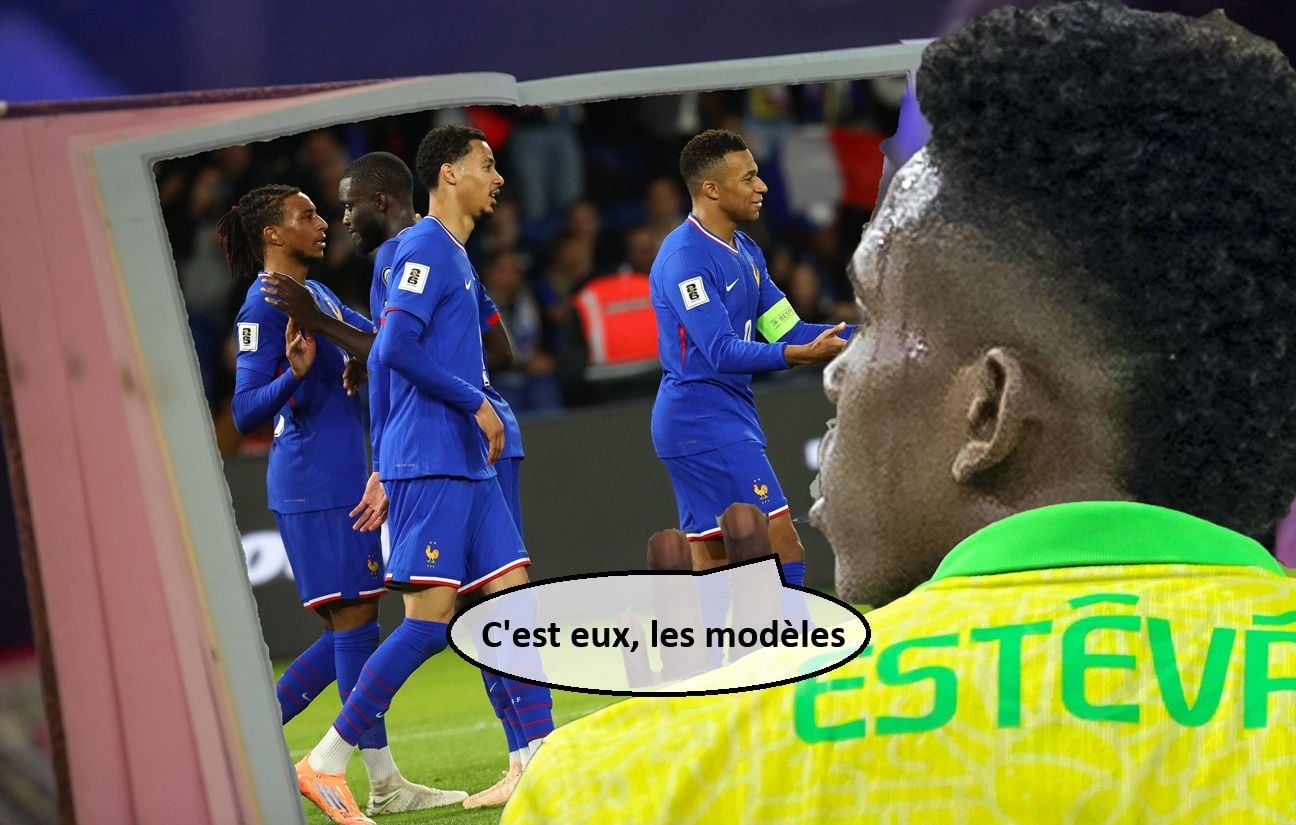
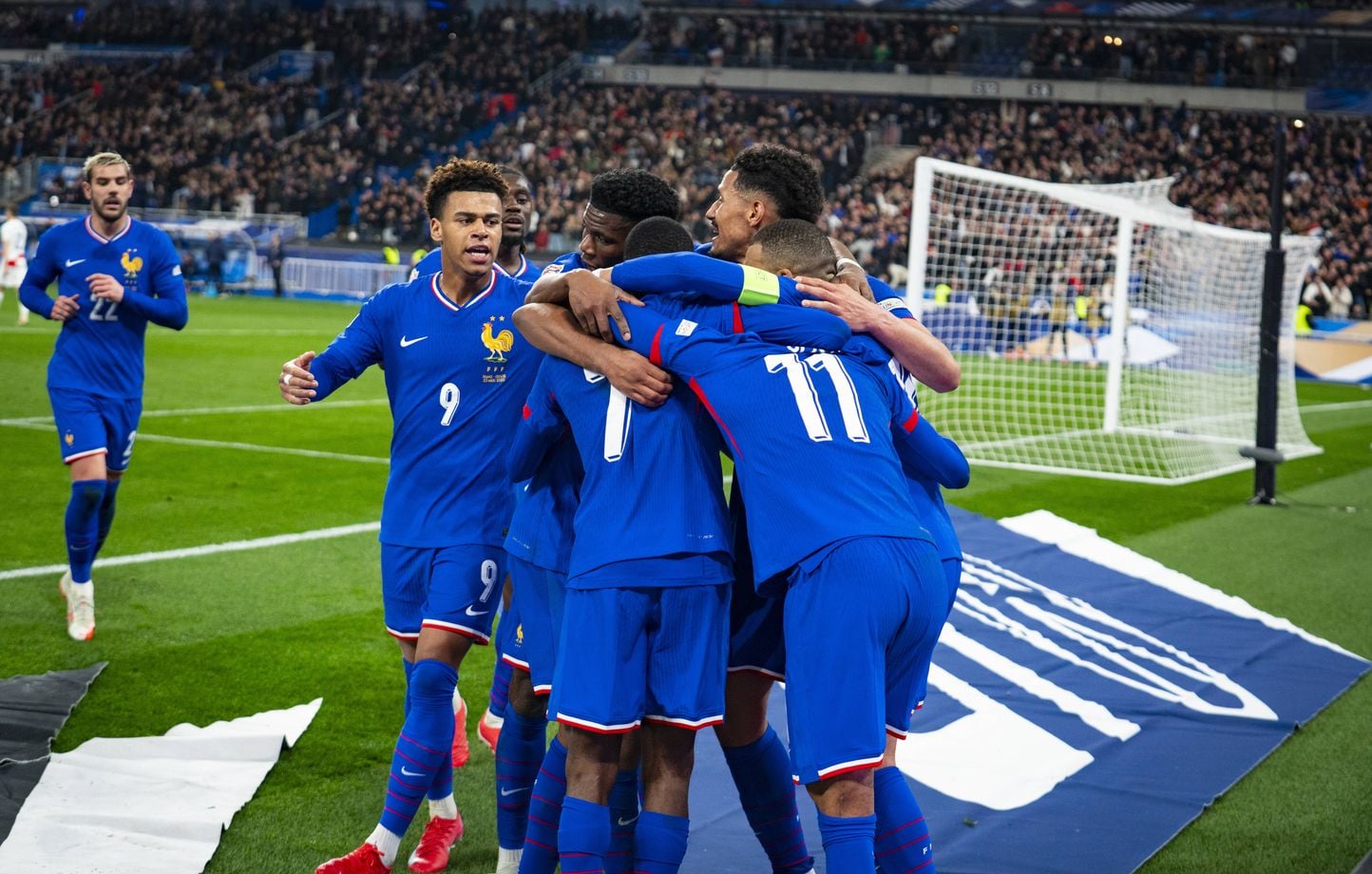
Time passes, passes, passes and many things have changed. Who could have imagined that the Brazilian selection would have disintegrated so quickly. Twenty years ago, the Auriverdes were preparing for the World Cup in Germany with Roberto Carlos, Cafu, Kaka, Ronaldinho, Ronaldo and Adriano. Here they are again, this Thursday to face the France of Mbappé, Dembélé, Doué, Cherki in a friendly match in the suburbs of Boston (United States), having to tinker around Vinicius and Raphinha, with the maestro Carlo Ancelotti at the head of a pack which has lost its splendor.
Since taking office a little less than a year ago, the Italian has not really convinced with a more than passable record (four victories in eight matches). “They brought in a renowned coach, but I don’t think the problem comes from him,” the legend Rivelino, world champion in 1970 with the best team of all time, analyzed on ESPN. The problem is that we are going through a difficult period if we talk about exceptional players, stars. We don’t have good players. »
With the absences of Neymar (finito) and Rodrygo (injured), Ancelotti, for example, called two players from Brentford and Bournemouth, symbols of this downgrading. “Since our last title in 2022, hope has faded over the years,” explains Brazilian Felipe Saad, who worked for Guingamp and is now a consultant on Ligue 1 +. In the country, people who follow football are not stupid, they see the names that were called by Didier Deschamps, it is at the top of the table everywhere, the Champions League. We are talking about players who play for Bournemouth. »
Fewer Brazilians in Europe…
“The decline in quality of Brazilian players is the subject of constant debate,” assures Brazilian journalist Luis Augusto Monaco. The decline in the number of stars is an indisputable fact. Brazilians have always been renowned for their technique, their dribbling and their creativity, but we no longer look for that much. » Or, in any case, not too much in Brazil. According to Sofascore, in 2000-2001, 23 players crossed the Atlantic during the summer transfer window to join Europe. In 2025-2026, there were only 11 left, including 4 via the obscure links between John Textor (Botafogo) and Evangelos Marinakis (Nottingham Forest).
« European clubs continue to look for players in Brazil, but with a profile different from that of players recruited in previous decades, continues the journalist. In the past, Europeans came looking for stars, players destined to become protagonists. Today, they invest in very young athletes or in players whose profile is closer to that of a European. When Chelsea pay a fortune for a 16-year-old boy like Estevão, the club is taking a gamble without having the certainty of success. »
Meanwhile, French players continue to export in large numbers internationally. There were still 20 of them to leave Ligue 1 last summer, including players with silky technique like Rayan Cherki (Manchester City), whom Brazil would not deny. Not to mention the many gems who are still in France and knocking very hard on the doors of bigger European clubs, like Maghnes Akliouche.
…And fewer Brazilians in Brazil too
In addition to a training problem, Brazil paradoxically suffers from its new financial power, which allows it to repatriate old players (Gerson, Paqueta) or to attract a few foreign stars (Memphis Depay, Yannick Bolasie, Saul Ñíguez) or cheap young South Americans. In total, 153 foreign players are playing in Serie A this season.
« When we take the teams at the top of the table, like Palmeiras, Flamengo, Cruzeiro, we see that there are five, six, seven foreigners among the starters, explains Felipe Saad. Athletico Paranense even started a match with nine foreigners. And that is to the detriment of young Brazilians, training and simply Brazilian profiles. »
So, has the “land of football”, as Didier Deschamps recalled last week, become nothing more than a shadow of itself? “The adoption of playing systems that favor tactics to the detriment of technique is considered one of the factors behind this decline,” indicates Luis Augusto Monaco, before adding:
“The legend Zico claims that this pattern of play made the typical Brazilian No. 10 disappear. Our players are prisoners of this model of play. And the defeat of the wonderful team of 1982 did a lot of damage to our football. From there, our game became more pragmatic with one phrase dominating the debate: “It is better to play ugly and win, than to play beautiful and lose.” »
And in a country which has not won for more than twenty years, and which is no longer necessarily cited among the big favorites for a World Cup (a national drama), the choice is quickly made. In France, the same debate has been occurring for several years, but in reverse. Despite good results with the Blues, Didier Deschamps is often accused of making his team play poorly even though he has a reservoir of incredible players at his disposal. All that remains is to reverse the roles. It starts this evening, since Brazil asked to play with their new blue jersey. To be inspired by the best, surely.




Leave a Reply